Repercussions of Recession

Friday, October 23, 2009

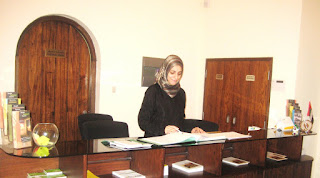
It’s been two years since the credit crunch hit Dubai affecting not only the economy but people’s lives. Here is one among a thousand tales of a once deployed man who faced the treachery of unemployment during recession.

‘I got a feeling of hitting rock bottom. One day I’m at my desk with a steady stream of income, and the next I’m on my laptop rewriting my CV,” reflects, 47, A.A (with held name by request) a highly educated Human Resource Manager, holding a British passport but originally from Pakistan. Mr. A, who has been residing in Dubai for the last three years was made redundant this August, a fate shared by up to one in ten workers in the UAE during the first six months of 2009, according to a recent survey by job sites Bayt.com and YouGov, an internet-based market research firm.


‘I read and heard about people losing their jobs; but I always regarded it was something that could happen to someone else. Not me.’ sighed A.A. ‘It’s quite ironical, as I was in charge of Human Resources, my job was to fire and hire, and the next thing I know I’m fired by my superiors. Losing a job was and still is unthinkable especially during this period of recession and when you have mouths to feed. I have two daughters, my wife and my mother to take care of...’ he adds.‘My company was cutting down on costs, I was told my position was no longer required and that was it, just like that I became unemployed. No complaints, No dissatisfaction, just unnecessary.’ said the outraged A.A.

Mr.A.A was made redundant in August 2009

‘It's insulting, even if you get the little speech on how it's due to economic conditions and not your performance, but the fact remains that you were let go and other people weren't. It's also frightening, because you're facing a bunch of unknowns just when you think you’re doing your job right for the last three years, just when you want your next pay check to pay off all those loans, the next school fees and to fix that leaking tap in the kitchen. Life takes this whole new turn leaving you in the ditch.’ said Mr. A filled with remorse.

Cutting down on costs had become primary. ‘The first thing I did was send my mother and children back home to London.’ said A.A, who reminisced them leaving this September, their school term was midway...but they had to leave, it was for the better. With what had happened, I didn’t know what to expect anymore. As for my wife, she stayed with me and I thank her for that, because without her I would have gone insane.’

When asked what the worst experience besides his redundancy he says, ‘It was the time when I had to tell my wife, my children and my mother. Being the bread-winner, your family depends on you for everything. So, me losing my job was the hardest to deal with.’

‘Then, as any normal unemployed person would do, I started looking for a job. I had a stipulated month to look for one before my visa expired.’ said A. ‘But in vain, he could not find one, recession has hit everyone pretty bad, even to this day.’, he added.

Mr.A has planned to return to London, to join his children and his mother. ‘I will be applying for an unemployment wages once I go back, till I find another job in London.’ said Mr. A.A

But unlike Mr.A.A, there are other Asian expatriates that do not have anything to fall on. No unemployment schemes to rely on, when they go back home, leaving them to start their living from scratch without any aid of any kind. Mr. A.A shares a word of advice to all the people out there, who find themselves in a similar plight like him. ‘Having a good spirit with a strong positive attitude will take you a long way. Everything happens for a reason, take each day as it comes and things will fall in its place.’


Photo Credits: Megna Kalvani

Images: A Mediator to Advertisements


"We are conscious of what we attend to -- and not conscious of what we do not attend to," William James, (1842-1910), a renowned American psychologist and philosopher.


Appealing images in Advertisements are strewn everywhere persuading consumer consciously or unconsciously.


Is the world being swallowed by branded images? Or are these brands swallowing us, innocent consumers? Are we being brainwashed by cleverly made ads with appealing images that are plastered all across the city every second of the day without even realizing it?

Look around you. Every nook is invaded by some form of image or the other. Be it on the skies, water or land. It’s everywhere, persuading, informing and entertaining making consumers aware that it exists. Images have become a prime component in today’s advertising. Advertisements which is known to be an ancillary medium, is soon becoming a primary one. And I see no reason why?


‘Holding my morning cup of coffee, I stagger down to the living room to read my newspaper only to be invaded with colourful, alluring images. Turning each ad-dominated news page, I smirk at the irony of a newspaper being more of an ad-paper.’ narrated Mr. Zayed Hussain, a Sharjah based businessman.

Magazines, television, online media to the simple outdoors have been raided with image after image. Not to forget, simplicities like our pens, plastic bags, sunshade covers for vehicles and vehicles themselves. It seems astonishing to believe that ads actually, unconsciously brainwash our minds. However, most of us do not realize the mind games the advertisers have been playing on our subconscious minds for the past fifty years. It's a scary thought, really, when you realize the advertisers have gained control of our lives without us even knowing it. According to a Senior English teacher, Mrs. Abraham “These talented advertisers really think about small but significant ways in which they can advertise their business. Images have not even been spared in bathroom stalls, which can be seen on the inside of the doors these days.”

Advertising images have invaded all walks of life, even park benches aren't spared...


Giving heights to subliminal advertising through images, slowly and steadily consumers are getting, be it consciously or unconsciously brainwashed by these surrounding ads influencing our tastes, our decisions, our expectations.

Advertisers use these subliminal techniques to influence the second and third level of our consciousness. They target the consumer's fears and desires, manipulating them in ways never thought possible. On the other hand, advertisers present to the consumer on the conscious level a safe, neutral, naturally appealing ad to appease the consumer's resistance to subliminal advertising. While glancing through an ad, the average consumer skims through paragraphs, barely noticing an ad that they have seem many times. When we are doing this, we are responding to our subliminal reception because the conscious mind is uninterested in the potentially offensive subliminal material.


The simple outdoors raided by persuading alluring image after image


The time of raising or moulding images through mass media advertising has just begun. But the difference unlike the old days being not how many consumers see an ad or the frequency of how often you see it, but rather finding ways to get consumers to invite these falsely represented images into their lives.

Wondering why, advertisers have got to get through so much, just to get their brand noticed. Well, for the obvious reasons, to get noticed of course, to stand out from the other same branded products. Advertisers already are making bold statements in their image by manipulating the design and wooing consumers by integrating messages so closely into entertainment that the two are all but indistinguishable.


Advertisements make bold statements by using images that are manipulated in terms of design in order to woo consumers. Fast food advertisements such as these have appetizing ads that make consumers, easy prey

Advertisers have taken a definite hold on our daily lives. Half of their dominating influence can be attributed to their use of subliminal advertising. They take advantage of the susceptibility in our subconscious minds. Especially with today’s high tech gadgets and latest computer technology, they have unparalleled resources to manoeuvre or influence each image to target a specific weakness in us. “The number of images on the Internet is countless, whichever page you visit it’s filled with a clutter of images be it advertisements or not, they are always trying to sell a product and it’s working; my purchases are being influenced by these advertisements.’ says Mr. Rahul, student from University of Wollongong.


How do we not fall into the advertisers trap? Optimum awareness is the key. Being conscious is the way to fight back, if we have to avoid that influence which advertisers are trying to control us. The next time we make a purchasing decision, ask "Why am I choosing this product?" Buy a product because of its taste, its quality, and its price. As the saying goes, never judge a book by its cover similarly, never buy a product because its packaging looks good or because it is a name brand. Remember, it is the major companies that have the resources to do subliminal advertising. Thus as a consumer; ‘Be smart & Think smart’, that should be our motto.


Appealing images on advertisements have flooded all corners of the Internet


For now, be more vigil…observe more closely how dominant our image-constructed world is getting to be especially with today’s world becoming an ad, ad, ad world, I just hope we don’t go m-ad with it.


Photo Credits: Megna Kalvani

The Pinoy Way of Life in the Emirates

Thursday, October 22, 2009


Among, the ninety two million Filipinos in the Philippines ten percent reside outside the Philippines. As searching for employment, gaining experience and exploring the world being a few of their motives for their migration.

Filipinos constitute approximately 4.3 per cent of the entire UAE population

Since 2007, the Filipino population in the UAE has shrunk by almost 20 per cent, mainly because of the palpable high costs of living in the country, the global economic downturn and higher demand for Filipino workers in other countries. “It's quite disappointing to learn many Filipinos were layed off and that my countrymen here in the UAE are declining. But the costs are just too high that saving has become impossible.” said Raymoind, resident of Dubai.

Filipinos constitute approximately 4.3 per cent of the entire UAE populationLatest figures released by the Philippines Embassy in Abu Dhabi showed there were 279,602 Filipinos in 2007, well below the estimated 350,000 previously. Filipinos constitute approximately 4.3 per cent of the entire UAE population. ‘The reason why I picked UAE over other places, is because it’s the easiest to get here unlike other countries.’ said 36 year old, Mrs. Janet Consunji, who came here in 2006.

Expatriate Filipinos are just like the other sixty per cent expatriates living in the United Arab Emirates. With their hectic working schedules swallowing up their lives and their weekends are spent unwinding and relaxing with family, friends and relatives, life is more or less the same for them all. ‘I have a very tiring job as a Sale assistant, but I need the money as life here is very tough’ said Ms. Nilsa Mae, a Sales assistant to Femina Fashions in Sharjah. ‘I spend my weekends with my family going to the beach or browsing at my favourite mall, Mall of the Emirates, Dubai’ the 23 year old added.


Richard Mata, an employee in Costa, Academic City


According to Overseas Filipino Workers report (2007), a great majority of the estimated 500 to 700 Filipinos who enter the United Arab Emirates on tourist visas everyday come here to look for work. Filipino workers in the UAE can be found mostly in huge free-trade zones in Dubai, Abu Dhabi, Sharjah and Ras Al Khaimah. ‘I first came to UAE in 2008, my only motive was to find work and make a living.’ said 26 year old Richard Mata, an employee in Costa, Dubai International Academic City.


The same report also reads that the UAE's economy depends heavily on an army of cheap foreign labour from the Asian sub-continent and the Far East. Filipinos in the United Arab Emirates are primarily migrant Overseas Filipino Workers (OFWs) employed in low positions in varying fields such as architecture, construction, cargo shipping, design engineering, energy, information technology, marketing, medical, real estate, retail, telecommunications, and tourism sectors or as domestic helpers- jobs that Emiratis often do not want.

The Philippine Department of Labour and Employment also has two Philippine Overseas Labour Offices (POLOs) in the UAE, in Abu Dhabi and Dubai. These offices, as well as agreements between the Filipino and UAE governments, have set the monthly minimum salary for OFW's at US$400. But due to the recent hit in recession, many expatriates faced a tough call as they lost their jobs "It's not just Filipinos, all nationalities working in the sector have been affected. Companies are just shedding unnecessary staff in sales and marketing," said Virgie Calvez, labour attaché with the Philippine Overseas Labour Office in Dubai.


Mr. Jerry M. Timario, Construction worker


But, most of the Filipino expats had one common thing to say that they miss their homes, their food and their green environment and they eventually want to go back to Philippines, but for now making a living is first priority to them. “I work all week; I do not get time for leisure during the weekends, just sleep. I miss my family a lot, I haven’t seen them since 2003.” said Mr. Jerry M. Timario, a 34 year old construction worker.


‘...exploring the world’ Ms. Marites Laysa

On the other hand, Ms. Marites Laysa said, “My work as a receptionist takes long hours and there is a lot of adjusting to not only time, but the environment, climate, customs and culture.” She also added that her reason for coming to UAE, was not centralized on finding work but on exploring the world and experiencing a different ambience which she has successfully done since her arrival to UAE in July 2008.

However, life goes on for those still surviving the hardships in the UAE. ‘Filipinos like to see good in everything...like a silver lining’ smiled 53 year old, Emily Kacuna Pabuaya. ‘Even though, there have been many ups and downs there have been good times as well...’she added.
Photo Credits: Megna Kalvani

Preserving Culture in the U.A.E

Saturday, October 17, 2009

Art Exhibition


The Arabian Art Centre, Sharjah Heritage Area


Artifacts displayed on the grounds of Sharjah Heritage Area


We all know United Arab Emirates as a modern one, witnessing dramatic changes in the few short years since the state was established, change that has provided them with all the benefits of a modern, developed society. At the same time, however, both Government and the people are determined that their heritage shall be preserved, in line with the late Sheikh Zayed's belief that 'a people that knows not its past can have neither a present nor a future'.


To act as repository of this heritage and a source of information for both visitors and the younger generation who have not experienced a traditional lifestyle, museums and heritage centres have been developed throughout the UAE.‘We preserve our history and culture in museums, through paintings that are so realistic that they almost speak.’ said Najlaa Fikry, an official at Sharjah Museums Department.


The Orientalists Collection' displays the works of art in the Sharjah Art Gallery, which were personally collected by His Highness Dr. Sheikh Sultan bin Mohammed Al Qasimi. The paintings represent Romantic views of the Arab countries and other Islamic lands as they were depicted by European artists and travellers in the 18th, 19th and the early 20th centuries.’ explained Najlaa. Additionally, Sharjah was designated as the cultural capital of the Arab world by UNESCO for its commitment to art, culture and preserving its heritage.


Ms.Najlaa Fikry, Official at Sharjah Museums Department


The Culture and Art Authority play an active role in keeping the history and culture alive during this materialistic and digital today, where youngsters seem to forget the very beginning....‘We host a variety of exhibitions, workshops and programmes that are suited for all ages. Our family programmes that are held every week offer hands-on and minds-on fun with bilingual programmes that are designed to educating children and their parents/caregivers on the culture of UAE. We organize workshops especially for children aged six to eleven, as teaching them when they are young is best. The programmes are held on Saturdays suitable for all, to make some time in their busy schedules.’ said Najlaa.


Sharjah Art Museum, established in 1948


UAE is a fine example of how well an indigenous community which survived an adverse environment for thousands of years by observing a strict tribal code could absorb tremendous change of lifestyle producing the best of two worlds within decades. Today, the indigenous values, heritage and culture which were refined by the adoption of Islam over the past millennium or so, continue to thrive notwithstanding the ultra modern look, infrastructure and facilities and the cosmopolitan, moderately liberal lifestyle that especially characterise the nation’s capital, Abu Dhabi.

Scattered throughout the UAE are forts that were once charged with defending a range of elements including an irrigation system, palm groves and trading hubs. Many of the forts also provided residency to the ruling families, while others served as military/police headquarters and prisons. Heritage villages have been established in Abu Dhabi, Dubai and Fujairah to provide visitors with a three-dimensional experience of life in the pre-developed UAE. The Emirates of Ajman, Sharjah, Al Ain, Umm al-Quwain and Ra’s al-Khaimah have established museums housing exhibits on archaeology, ethnography and other artefacts of historic and cultural significance. While some collections are not extensive and certain destinations are difficult to reach unless on a guided tour, their existence testifies to the growing focus of cultural preservation throughout the UAE.

Despite the Emirates limitations of being a mainly desert environment and a semi-nomadic lifestyle that prevailed up to the 20th Century, UAE has a rich past evidenced by scores of restored mud fortresses across the emirate and remains of an underground irrigation system in Al-Ain oasis, which has been continuously inhabited for more than 4,000 years and is considered as the old cultural centre of the Emirate.

According to the 2003 Convention, Intangible heritage is defined as “practices, representations, expressions, knowledge, skills- as well as the instruments, objects, artifacts and cultural spaces associated therewith- that communities, groups and, in some cases, individuals recognize as part of their cultural heritage.” The UAE is ripe with such heritage. The seven Emirates are more than the Burj Dubai and Yas Marina. They are a vibrant and diverse federation of seven autonomous states which share an ancient heritage. Emirate’s cultural life is rooted in a long tradition of literary work, horseback riding, falconry, traditional artwork and the cultural exchange brought about by trade routes. The large collaboration of museums provide visitors with a glimpse of the emirate’s cultural life, history and heritage. Today, culture and arts are witnessing a revival in the emirate with many clubs and funds dedicated to their advancement.

According to Emirates News Agency, The UAE has offered $2million to UNESCO and African countries to safeguard the heritage projects. This was announced at the ceremony held by the Abu Dhabi Authority for Culture and Heritage at Emirates Palace on 3rd October 2009 marking the conclusion of the fourth session of the Intergovernmental Committee on Safeguarding the Intangible Cultural Heritage at UNESCO, in presence of Director-General of UNESCO Koichiro Matsuura.


Photo credits: Megna Kalvani